
BCS Heritage
The foundation of British cardiology began with Sir James Mackenzie (1853 – 1925), a Scot who graduated from the University of Edinburgh and subsequently became a general practitioner in Burnley. Mackenzie developed an interest in the pulse and his work attracted the attention of other physicians interested in heart disease.
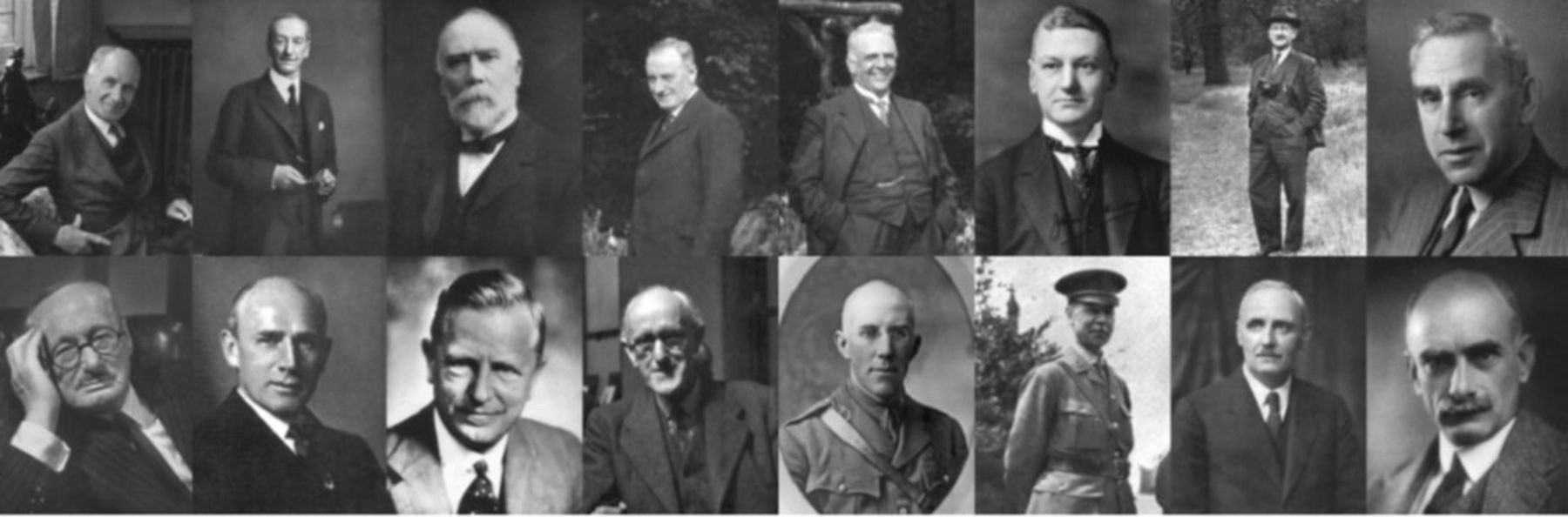
It was around 1910 that Mackenzie suggested this small group of like-minded physicians should form a club, but the First World War intervened. After the war, the government appointed consultants in all regions of Britain to give advice about pensions for people with war-related cardiac problems. The first meeting of the Cardiac Club was held in Oxford on Saturday 22 April 1922 and the original members can be seen in the image above.
For our centenary celebrations in 2022 we published a special edition of our official journal Heart, including an article on our history by BCS Archivist Dr Caroline Coats.
BCS Museum and Archive
The historical archive of the British Cardiovascular Society provides a unique insight into British cardiology and the development of our specialty. The collection was the brainchild of Dr Arthur Hollman (1923 – 2014), a former BCS secretary who bequeathed many items and promoted the importance of history and plants in medicine.
He followed in the footsteps of Maurice Campbell and Evan Bedford, who had carefully ensured the story of the Society and specialty was maintained for future generations. The Arthur Hollman BCS Archive aims to acquire, organise and preserve material relating to members of the Society and British cardiology.
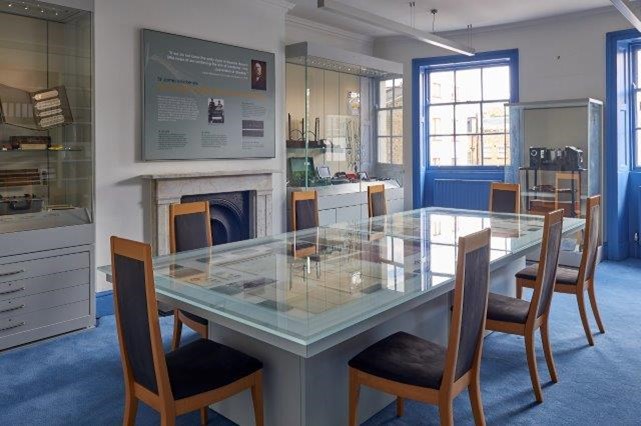
The BCS Museum, Library and Archive is exhibited across several floors of BCS HQ, 9 Fitzroy Square, London.
The three main meeting rooms are named after pioneers of British cardiology: Sir James Mackenzie, sir Thomas Lewis and Paul Wood.
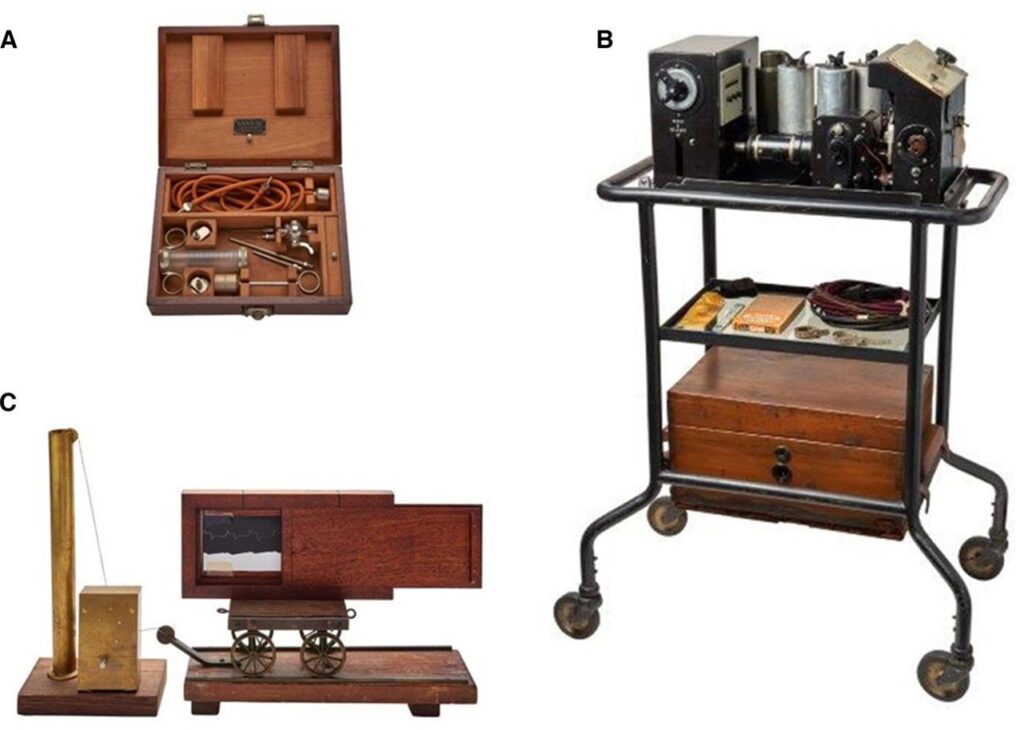
Items of note include
- an early pericardial aspiration kit (a)
- a complete 1929 portable ECG made by the Cambridge Instrument Company (b)
- the original toy train used by Augustus Waller in 1887 to record the first human electrocardiogram.
9 Fitzroy Square – the home of the British Cardiovascular Society
9 Fitzroy Square was designed by the renowned architect Robert Adam as one of a row of houses on the eastern side of Fitzroy Square in central London. Designed in the neoclassical style, the houses were built speculatively to attract wealthy aristocratic families. The lease for the site was given to the Adam brothers in 1792 and building commenced in 1794. As Robert died in 1792, the houses were completed by his brothers James and William.
The house, which is Grade II* listed by Historic England, is now our headquarters and includes meeting rooms, office space and the BCS Museum, Library and Archive collections.
Can I visit 9 Fitzroy Square?
Yes, you can! If you are a BCS member, or researcher, you are welcome to visit the building including our museum, library and archives – just contact us at [email protected] to arrange a visit.
We also take part in Open House London each year in September, enabling the wider public to visit free of charge and view our collection of objects and artefacts from the history of cardiology, displayed in cases throughout the building.
Architectural technical details
The house is built from Portland stone with a slate mansard roof and dormers. The building has 3 storeys, an attic and a basement, which opens onto a small paved enclosed courtyard garden at the rear.
The round-arched doorway features pilaster-jambs carrying a cornice-head; fanlight and panelled door. There is a plain band at 1st floor level. The windows are square-headed recessed sash windows, with cast-iron balconies on the first floor. The house features a cornice and balustraded parapet. Attached are cast-iron railings with urn finials to areas.
The house also carries an English Heritage blue plaque of Professor A W Hoffmann, a famous organic chemist, who lived there in the mid-19th Century.